

Computing
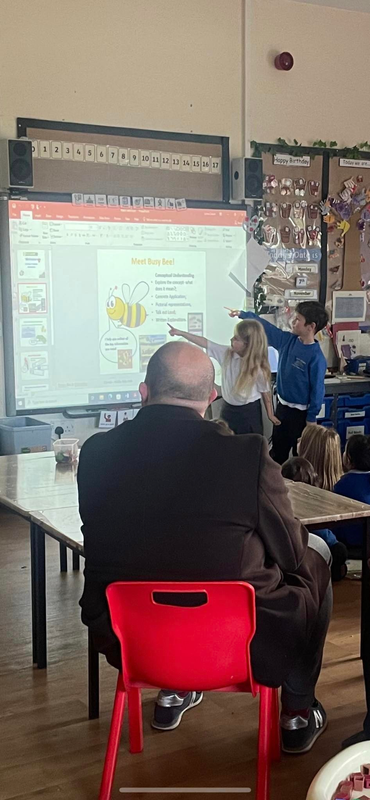
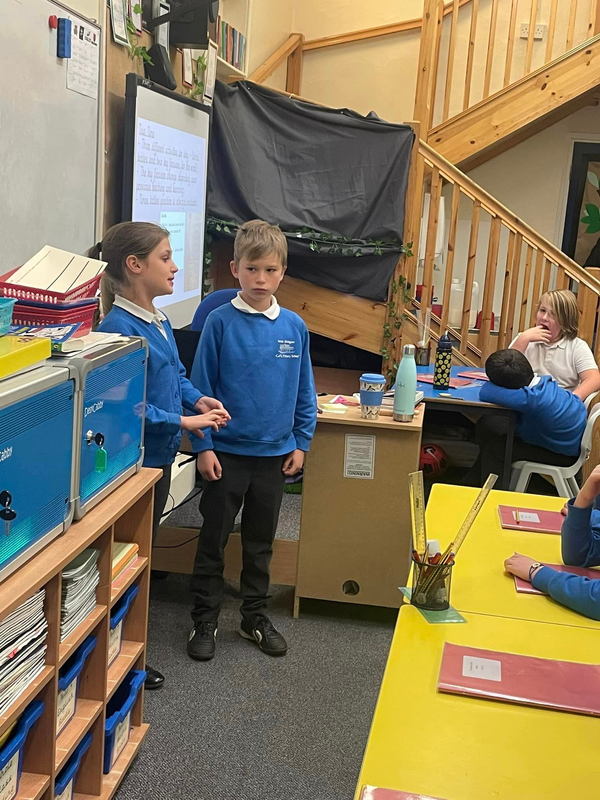
Our Computing curriculum provides a high-quality education that equips pupils with the knowledge and skills to use computational thinking and creativity to understand and shape the world. We aim for children to develop a secure understanding of computational systems, both digital and non-digital, and to apply this knowledge in practical, meaningful contexts. Our approach ensures every child gains the confidence and capability to use technology effectively, safely, and responsibly, preparing them for future learning and life in a digital world.
Computing in Early Years (Key foundational knowledge)
Computing in the Early Years is taught through several different areas, including ‘Physical Development’, Personal, Social and Emotional Development’, ‘Expressive Arts and Design’ and ‘Understanding the World’.
The EYFS Framework states:
Physical Development
Physical activity is vital in children’s all-round development, enabling them to pursue happy, healthy and active lives7. Gross and fine motor experiences develop incrementally throughout early childhood, starting with sensory explorations and the development of a child’s strength, co-ordination and positional awareness through tummy time, crawling and play movement with both objects and adults. By creating games and providing opportunities for play both indoors and outdoors, adults can support children to develop their core strength, stability, balance, spatial awareness, co-ordination and agility. Gross motor skills provide the foundation for developing healthy bodies and social and emotional well-being. Fine motor control and precision helps with hand-eye co-ordination, which is later linked to early literacy. Repeated and varied opportunities to explore and play with small world activities, puzzles, arts and crafts and the practice of using small tools, with feedback and support from adults, allow children to develop proficiency, control and confidence.
Personal, Social and Emotional Development
Children’s personal, social and emotional development (PSED) is crucial for children to lead healthy and happy lives, and is fundamental to their cognitive development. Underpinning their personal development are the important attachments that shape their social world. Strong, warm and supportive 9 relationships with adults enable children to learn how to understand their own feelings and those of others. Children should be supported to manage emotions, develop a positive sense of self, set themselves simple goals, have confidence in their own abilities, to persist and wait for what they want and direct attention as necessary. Through adult modelling and guidance, they will learn how to look after their bodies, including healthy eating, and manage personal needs independently. Through supported interaction with other children, they learn how to make good friendships, co-operate and resolve conflicts peaceably. These attributes will provide a secure platform from which children can achieve at school and in later life.
Expressive Arts and Design
The development of children’s artistic and cultural awareness supports their imagination and creativity. It is important that children have regular opportunities to engage with the arts, enabling them to explore and play with a wide range of media and materials. The quality and variety of what children see, hear and participate in is crucial for developing their understanding, self-expression, vocabulary and ability to communicate through the arts. The frequency, repetition and depth of their experiences are fundamental to their progress in interpreting and appreciating what they hear, respond to and observe.
Understanding the World
Understanding the world involves guiding children to make sense of their physical world and their community. The frequency and range of children’s personal experiences increases their knowledge and sense of the world around them – from visiting parks, libraries and museums to meeting important members of society such as police officers, nurses and firefighters. In addition, listening to a broad selection of stories, non-fiction, rhymes and poems will foster their understanding of our culturally, socially, technologically and ecologically diverse world. As well as building important knowledge, this extends their familiarity with words that support understanding across domains. Enriching and widening children’s vocabulary will support later reading comprehension.
The table below outlines the aspects of the Elevate EYFS Curriculum that feed into our Computing curriculum progression:
|
Reception (4-5 year olds) |
Early Learning Goals |
|
Explore how things work Compare and describe the changes from past to present in buildings, transport, school life, fashions, technology Children know what the internet is and what it can be used for, talking about age-appropriateness when discussing apps, films and other online platforms. Create video recordings and photos using an IPad and use these to enhance learning. Use the internet/technology with supervision to support and extend learning e.g using google images to find photographs of structures to recreate in building area. To follow and understand direction language e.g left and right, up and down. To know different tools can create a different affect or outcome e.g a big paint brush creates a different mark than a thin paint brush. Children can talk about some ways they can keep safe when online and using devices. |
ELG: Past and Present Know some similarities and differences between things in the past and now.
ELG: Physical Development Negotiate space and obstacles Use a range of small tools, including scissors, paint brushes and cutlery;
ELG: Personal, Social and Emotional Development To show an ability to follow instructions involving several ideas or actions. ELG: Expressive Arts and Design Safely use and explore a variety of materials, tools and techniques, experimenting with colour, design, texture, form and function. |
|
Vocabulary iPad internet technology app search direction instruction command online safety design information device create design follow change screen under over up down forward backwards. |
|
Key Intentions
- Develop enthusiasm, confidence and enjoyment when using a variety of technology.
- Use ICT to select, find and use information
- Apply hardware and software to creative and appropriate uses of information;
- Use ICT skills to develop children's language and communication skills;
- Explore children’s attitudes towards ICT and its value to them and society in general.
Implementation
- The National Curriculum for science is taught to all year groups.
- A clear progression in knowledge, skills and vocabulary is taught throughout the school starting at Early Years through to year 6 to ensure connections are clear, coverage is met and the sequence builds on skills as children progress through school.
- Sequencing of lessons allows for children to connect previously taught knowledge from across the curriculum to new learning in order to help make connections and understand new learning.
- Trio Time is used to retrieve and reinforce previously taught knowledge in order to consolidate prior learning, this is discussed verbally at the start of computing lessons.
- Teachers assess and adapt teaching for all groups of learners, specifically providing extra targeted support and challenge for SEND, pupil premium and our most vulnerable children.
- We ensure pupils secure the essential foundational knowledge, beginning in Early Years, that enables them to build increasingly complex understanding over time, so that the curriculum is coherently sequenced, cumulative, and helps all children know more and remember more.
- Planning for creative and innovative activities that ensures consistency in teaching, excitement and challenge for all.
- Providing access to resources which aid in the acquisition of skills and knowledge through the use of PurpleMash and curriculum planning.
- Providing access to the hardware (computers, tablets and programmable equipment) and software that they need to develop knowledge and skills of digital systems and their applications
- Providing wider curriculum links and opportunities for the safe use of digital systems.
- Use more practical activities not involving information technology to introduce difficult concepts or practise/assess certain skills.
Impact
- Make outstanding progress in computing and enjoy participating in the subject.
- Talk confidently about computing and their learning
- Will be confident users of technology, able to use it to accomplish a wide variety of goals, both at home and in school.
- Have a secure and comprehensive knowledge of the implications of technology and digital systems.
- Learn through first-hand experience about the different types of information technology and its potential uses.
- Understand the potential risks associated with the use of information technology and how to deal with these risks in a safe and secure fashion.
- Feel happy, safe and comfortable in using different software and hardware for a variety of purposes.
| Name | Format | ||
|---|---|---|---|
| Files | |||
| Computing Teach Computing Teacher Guide KS1.pdf | |||
| Computing Teach Computing Teacher Guide KS2.pdf | |||