
Maths
-
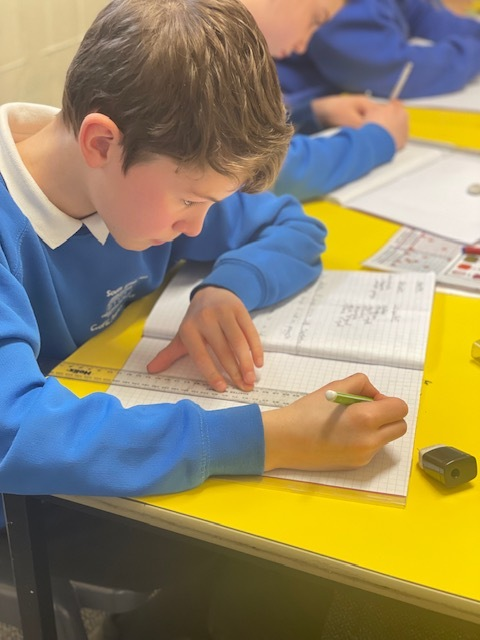
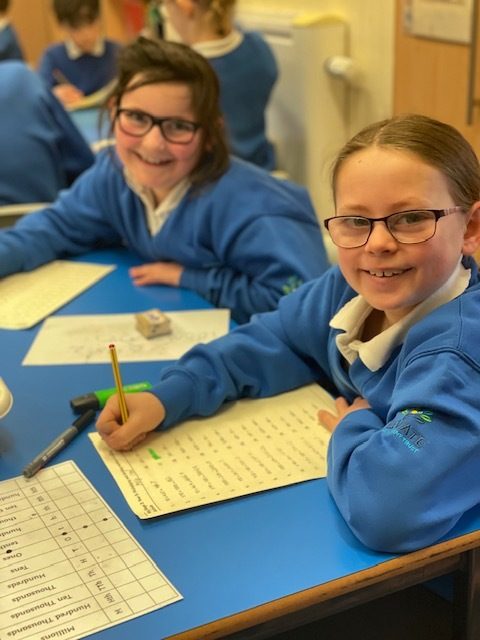
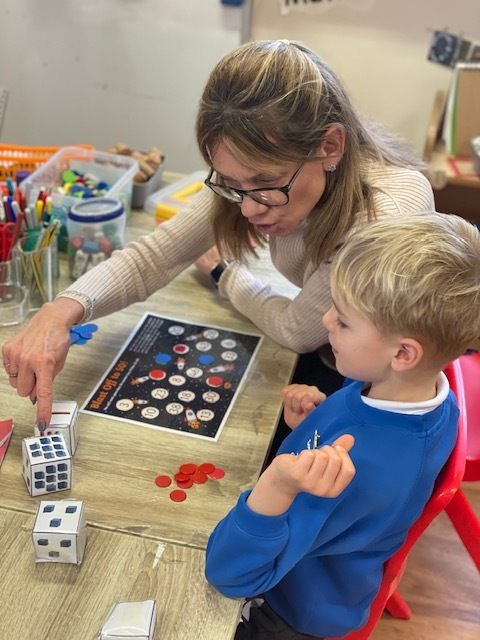
Develop a culture where children enjoy mathematics, engage positively with their learning, and build secure foundational knowledge that enables them to flourish across the curriculum.
-
Promote positive mathematical mindsets in the EYFS - Y6 so that children feel confident, challenged, and able to experience success.
-
Secure children’s understanding of key concepts, mathematical language, key facts, and calculation strategies, enabling them to reason and problem-solve fluently.
Implementation
The National Curriculum for maths is taught to all year groups using a CPR approach (Conceptual Understanding, Procedural Fluency, and Reasoning & Problem Solving) to develop mastery. This is tailored to the needs of all learners.
1. Conceptual Understanding- Children develop a secure understanding of mathematical concepts. This includes exposure to key vocabulary and real-life applications of skills. Key strategies are explicitly modelled, with opportunities for shared practice.
2. Procedural Fluency- Children are provided with a wide range of opportunities to practise and secure the strategies they have learned.
3. Reasoning and Problem Solving- Children apply their knowledge in varied contexts to deepen understanding. They articulate their thinking using terminology such as describe, explain, convince, justify, and prove.
- A clear progression in knowledge, skills and vocabulary is taught throughout the school starting in the Early Years through to year 6 to ensure connections are clear, coverage is met and the sequence builds on prior learning.
- Trio Time is used to retrieve and reinforce previously taught knowledge and to assess retention.
- Teachers assess and adapt teaching for all groups of learners, specifically providing extra targeted support and challenge for SEND, pupil premium and our most vulnerable children.
- For each mathematical topic, key vocabulary, definitions and strategies are displayed on working walls to support children's learning.
- Mastering Number is embedded in EYFS and KS1 to strengthen number sense and early fluency.
- White Rose Schemes of Learning are used to support planning, resourcing, and assessment.
- In mixed-age classes (Kingfishers and Bluebirds), teachers plan and deliver objectives systematically across year groups through a split-input approach.
- Times Table Rockstars and Claire Christie’s times tables resources are used to build multiplication fluency.
- Independent work, through star challenges, provides opportunities for children to develop fluency, independence, and stamina whilst also challenging themselves.
- Reasoning, problem solving, and oracy are integral to independent work, allowing children to deepen their mathematical thinking.
- Arithmetic Clinic is delivered weekly to develop arithmetic skills and stamina. Misconceptions or areas for development are identified and taught explicitly the following week.
- We ensure pupils secure the essential foundational knowledge, beginning in Early Years, that enables them to build increasingly complex understanding over time, so that the curriculum is coherently sequenced, cumulative, and helps all children know more and remember more.
Impact
Children will:
-
Become competent and confident mathematicians with secure understanding of mathematical concepts.
-
Develop a love for maths and actively participate in mathematical dialogue with peers and adults.
-
Achieve automaticity in core skills such as times tables and number bonds.
-
Apply their knowledge in a range of contexts, articulating their thinking at a deeper level through reasoning and problem solving.
| Name | Format | ||
|---|---|---|---|
| Files | |||
| Helping with Maths at Home EYFS.pdf | |||
| Helping with Maths at Home Y1.pdf | |||
| Helping with Maths at Home Y2.pdf | |||
| Helping with Maths at Home Y3.pdf | |||
| Helping with Maths at Home Y4.pdf | |||
| Helping with Maths at Home Y5.pdf | |||
| Helping with Maths at Home Y6.pdf |