

Forest School
Why we do it...
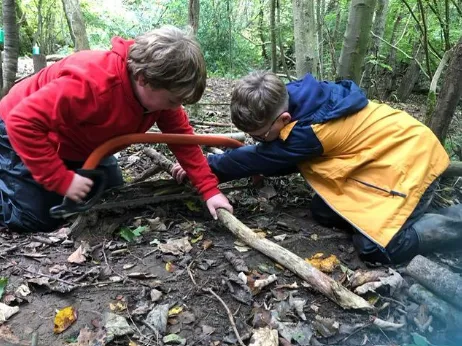
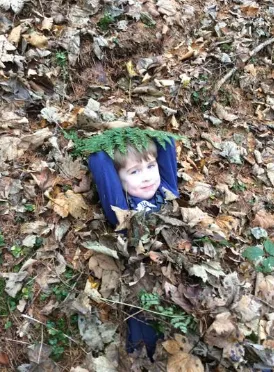
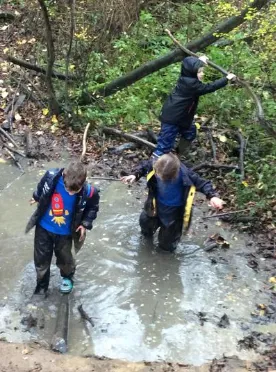
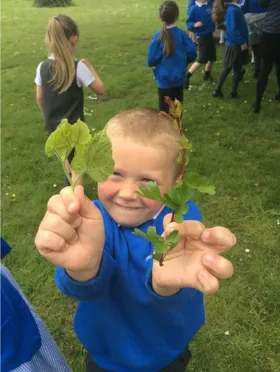
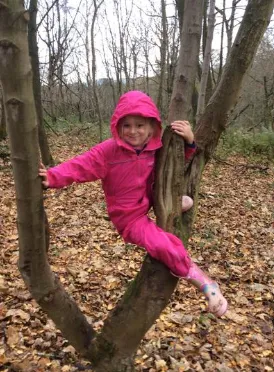
'I like being near all the nature and making dens. I love it because we have so much space'
'I like building dens and being outside so I can move'
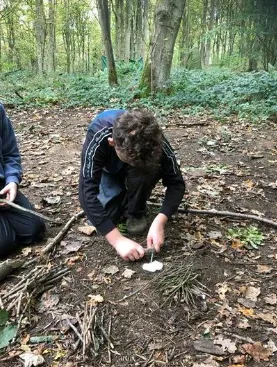
'I like the calmness of nature and I forget all about my worries'
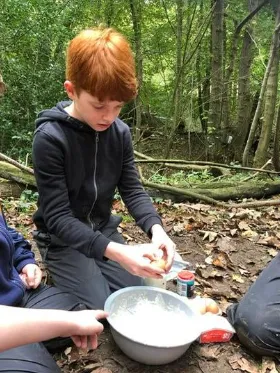
'I feel happy all the time here, I get to roam free and don't have to write'
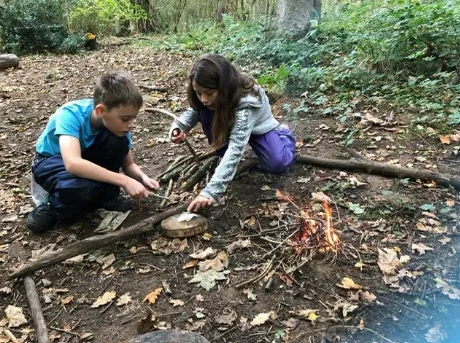
'We have fun playing new games with friends'
'The setting always changes'
'I find I play with different people at Forest School'
Forest School
At South Kilvington C of E Academy, our Forest School programme is designed to make a distinctive and powerful contribution to pupils’ personal development, wellbeing and character education.
Intent
Rooted in the Forest School Association’s six principles, our intent is to:
1. Develop Confident, Resilient and Independent Learners
We aim to build pupils’ self-belief, intrinsic motivation, perseverance and resilience through repeated, supported experiences in a natural woodland environment.
2. Strengthen Social, Emotional and Metacognitive Skills
Forest School creates intentional opportunities for pupils to:
- develop self-awareness,
- reflect on their learning behaviours,
- improve emotional regulation,
- build empathy and collaboration skills. These contribute directly to pupils’ wellbeing and readiness for learning, focusing on positive behaviour and attitudes.
3. Foster Environmental Stewardship and Ethical Responsibility
Through frequent immersion in a high-quality natural environment, pupils develop an appreciation of the natural world, a sense of stewardship, and a desire to protect and care for the environment, supporting both SMSC and character formation.
4. Promote Physical Health, Mental Wellbeing and Safe Risk-Taking
We intentionally support pupils to understand and manage appropriate risks, build physical confidence and recognise the mental health benefits of outdoor learning, with a clear emphasis on keeping children safe, healthy and emotionally secure.
5. Provide Equitable Access to High-Quality Outdoor Learning
Every child, regardless of background, receives sustained access to Forest School so that all pupils benefit from its impact on wellbeing, social development and personal growth.
Implementation
Our Forest School programme is delivered through a structured, progressive model that aligns with both the Forest School Association principles and our expectations for high-quality provision.
1. Planned Long-Term Programme (FSA Principle 4)
- Every child receives 10 consecutive sessions in Years 1, 3 and 5 (totalling 30 sessions).
- This model ensures pupils have sustained, repeated exposure that builds confidence, independence and skill over time.
2. High-Quality Professional Provision (FSA Principle 2)
- Sessions are delivered by qualified Forest School practitioners from Yorkshire Forest Folk.
- Practitioners observe children closely and scaffold learning through high-quality interaction, not direct instruction.
- Children’s interests, wellbeing and developmental needs shape each session.
3. Child-Led Learning (FSA Principle 1)
Forest School sessions are child-led by design. Activities are chosen and adapted in response to pupils’ curiosity, developmental stage and emotional readiness, enabling them to:
- develop intrinsic motivation,
- take ownership of their learning,
- practise problem-solving and teamwork,
- follow lines of enquiry inspired by the natural environment.
4. Rich Learning Environment (FSA Principle 3)
- Sessions take place in Kilburn Woods, a diverse natural environment providing open-ended opportunities for exploration, enquiry and imaginative play.
- Children learn how to minimise their environmental impact and care for living things.
5. Safe, Supported Risk-Taking (FSA Principle 6)
- Pupils learn to assess and manage real-world risks (e.g. fires, tools, uneven ground, water).
- Adults maintain high-quality risk assessment practices to ensure safe boundaries while allowing challenge.
6. Reflective Practice (Supporting Personal Development & Wellbeing)
Time is built into every session for children to:
- reflect on personal achievements,
- consider challenges and emotional responses,
- set personal goals,
- celebrate teamwork and resilience.
This enhances metacognition, self-regulation and emotional literacy.
Impact
By the end of Year 6, pupils at South Kilvington demonstrate strong personal development and character qualities as a result of their Forest School experiences.
1. Personal Development & Character
Pupils leave our school as:
- confident, resilient individuals,
- able to persevere through challenge,
- capable of working collaboratively,
- empathetic and respectful of others,
- equipped with the self-awareness needed for future learning.
2. Emotional Literacy and Wellbeing
Pupils demonstrate:
- improved emotional regulation,
- stronger metacognitive awareness,
- greater understanding of the impact of nature on wellbeing,
- reduced anxiety and increased confidence in unfamiliar situations.
3. Environmental Stewardship
Children develop a deep, meaningful appreciation of the natural world. They:
- understand the importance of caring for the environment,
- actively seek to minimise their impact,
- recognise biodiversity and local ecology as important aspects of their community and identity.
4. Behaviour, Attitudes and Collaboration
Forest School experiences contribute to:
- improved teamwork and communication,
- positive relationships,
- increased engagement and readiness to learn,
- safer, more responsible behaviour around managed risks.
5. Readiness for Transition
By the end of Year 6, pupils are well-prepared for secondary school. They can:
- think critically and independently,
- collaborate effectively,
- bounce back from setbacks,
- manage risk appropriately,
- adapt to change with confidence and self-belief.
Useful websites/resources:
John Muir trust https://www.johnmuirtrust.org/john-muir-award/
https://www.ltl.org.uk/free-resources/ Brilliant resources with learning ideas across all ages and subject areas (the resources in the leaflets I sent home at the start of lockdown in March are just a few from this fantastic site)
The Woodland Trust https://www.woodlandtrust.org.uk http://www.naturedetectives.org.uk/packs
The National trust https://www.nationaltrust.org.uk
Outdoor inspired ideas- 50 things to do before you are 11 ¾ https://www.nationaltrust.org.uk/50-things-to-do
Child friendly app with plenty of great learning ideas and starting points https://www.missionexplore.net/
This is a great way to get children outside walking and exploring, a worldwide treasure hunt! https://www.geocaching.com/play
http://ypte.org.uk/ Environmental Involvement for Young People- are a charity that aims to encourage young people’s understanding of the environment and of the need for sustainability. A good child friendly (KS2) reference section.