

Religious Education
Intent
Religious Education (RE) at South Kilvington C of E Academy prepares pupils to thrive in an increasingly diverse society. Through a well-structured curriculum, children develop a secure understanding of Christianity alongside knowledge of other major religions and worldviews. This enables them to appreciate a wide range of beliefs, respect differences, and recognise common values and connections between faiths and ways of life.
Implementation
We implement this through:
- half-termly RE teaching weeks which focus on big questions linked a world faith.
- personalised planning from the ‘Understanding Christianity’ resources and the RE Today planning units. These ensure there is a clear progression in knowledge, skills and vocabulary taught throughout the school starting at Early Years through to year 6 to ensure connections are clear, coverage is met and the sequence builds on skills as children progress through school.
- sequencing of lessons that allow children to connect previously taught knowledge from the RE curriculum to new learning in order to help make connections and understand new learning.
- Trio Time to retrieve and reinforce previously taught knowledge in order to consolidate prior learning.
- teachers assess and adapt teaching for all groups of learners, specifically providing extra targeted support and challenge for SEND, pupil premium and our most vulnerable children.
- ensuring pupils secure the essential foundational knowledge, beginning in Early Years, that enables them to build increasingly complex understanding over time, so that the curriculum is coherently sequenced, cumulative, and helps all children know more and remember more
- recording samples of work and discussions in individual RE books for assessment purposes.
- reinforcing RE learning through English during RE weeks.
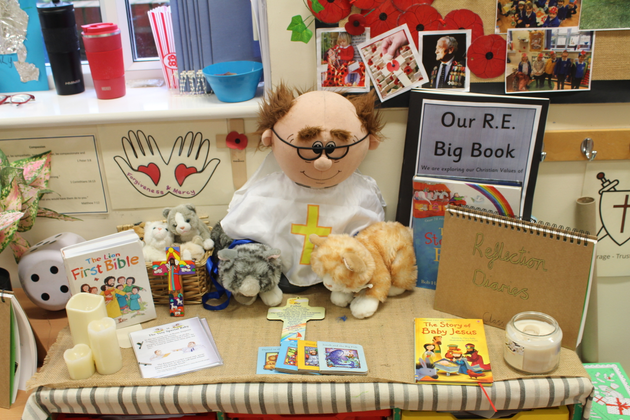
- a wide variety of enrichment opportunities for development of personal, moral, and spiritual reflection and development such as PSHE sessions, Reflection Areas, visits to places of worship and pupil leadership roles and responsibilities.
Impact
- The impact of our approach in RE will be monitored through lesson observations, scrutiny of pupil’s work and collecting pupil views.
- Pupils will confidently and knowledgeably discuss and compare religious beliefs and practices.
- Teachers will make informal assessments during lessons and summative assessments at the end of units of work as to whether pupils are meeting the expected standards for their key stage.
of
Zoom:
Search: